Trendy or Timeless? The Rule That Decides Which Accessories Are Worth Buying
Most people get the best result by buying both, in a set order. Put timeless pieces where an accessory gets worn daily and costs real money: the everyday bag, the belt, loafers. Keep trends for smaller accents you can replace, such as a sunglasses shape, a coloured scarf or a statement clutch. The question of trend accessoires oder zeitlos has less to do with taste than with how often you will reach for the piece. A new arrival earns its place if it works with at least three outfits you already own. If it only makes sense with a new outfit, you are paying for the trend twice.
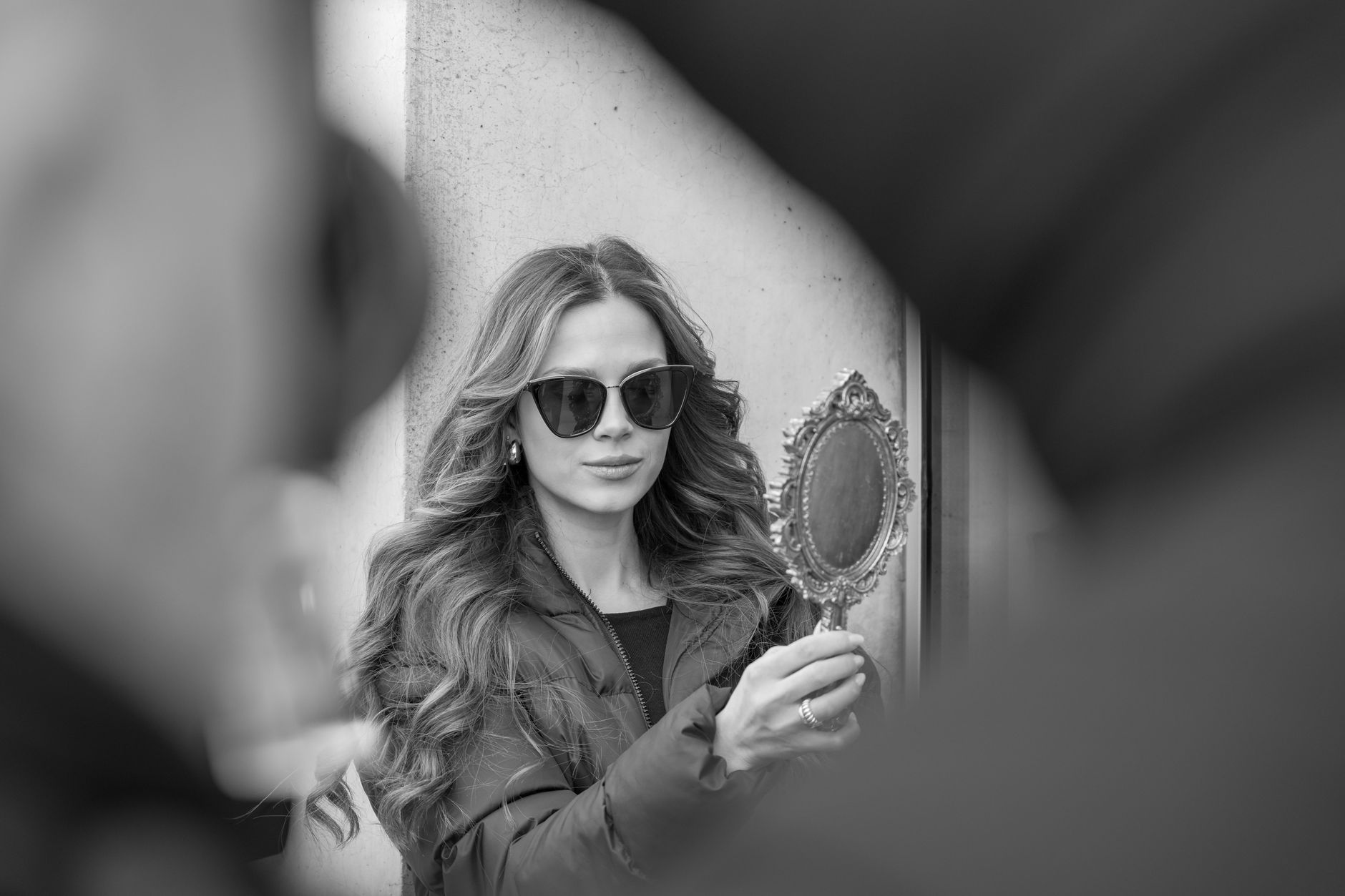
Why do trend accessories so often end up unworn?
Think of the micro bag in this season's colour, bought because it looked perfect in the campaign photo. At home it goes with one dress, clashes with your winter coat and is too small for a phone and keys. By spring it is in the wardrobe with the tags still on. The accessory itself is fine. The problem is that it was bought for one look, not for the wardrobe you actually have.
That is the real issue behind trend versus timeless. Trend pieces are usually picked on impact. Classics are picked on fit with what you already own. When a trend piece fails, it is rarely because trends are bad. It is because nobody checked how it would combine.
Cost per wear makes this concrete. Suppose a CHF 180 leather bag gets carried two or three times a week over two winters. That comes to roughly 150 to 250 wears, or around one franc per wear. A CHF 60 trend clutch worn three times works out at CHF 20 per wear. These figures are illustrative, but the pattern holds across categories: the piece you wear most is almost always the better buy, whatever it cost.
Online shopping makes the trap worse. A product photo shows the accessory with a styled outfit you may not own, so it hides exactly what you need to judge: how it looks with your coat, your shoes and your everyday colours.
What is changing in how accessories are made and sold in 2026?
The rules behind the products are shifting, and that changes how you can judge quality online. The EU's Ecodesign for Sustainable Products Regulation replaces the older Ecodesign Directive and asks for products, textiles and accessories included, to be designed for durability, repairability and resource efficiency. Textiles and footwear were confirmed as a priority group in the Commission's first Working Plan in April 2025.
The detail matters for accessories. According to Greenstitch's overview of the ESPR, the planned fashion requirements cover tear and tensile strength, seam slippage, colour fastness after repeated washing, and cycle testing for zippers, buttons and fasteners. Those are exactly the parts where a scarf, a bag or a belt usually fails first.
Two more changes affect what reaches the shelf. In September 2025, the European Parliament approved rules requiring producers of clothing, accessories, hats and footwear to pay for collection, sorting and recycling, including for items sold online. And a revision of the EU textile labelling rules is expected to require a digital label or QR code linking to a Digital Product Passport, as Addleshaw Goddard explains, with details on composition and repairability.
Switzerland is not an EU member, but much of what Swiss shoppers buy is also made for the EU market, so these standards tend to shape the assortment anyway. Spending habits are moving in the same direction: Eurostat reports that clothing and footwear fell to 4.0% of EU household consumption in 2020, down from about 4.9% in 2016. With smaller fashion budgets and better product data on the way, buyers have more reason to judge every accessory on build quality, trend pieces included.
Trend accessoires oder zeitlos: which pieces deserve which approach?
A useful rule: the more often you wear an accessory and the more it costs, the more timeless it should be. Daily, expensive pieces need to last through several style cycles. Occasional, smaller pieces are where trends do the least damage and the most good. The main guide to accessories and statement pieces goes deeper into styling. The table below applies the rule category by category.
| Accessory | Typical wear | Better approach | What to check before buying |
|---|---|---|---|
| Everyday bag | Several times a week | Timeless shape, neutral or deep colour | Closed top, strap attachment, lining, zipper quality |
| Belt | Most working days | Timeless, plain buckle | Full-grain or solid material, buckle finish, hole spacing |
| Loafers | Office and weekend | Timeless cut, seasonal colour optional | Suede or leather quality, sole construction, fit |
| Sunglasses | Seasonal, often daily in summer | Trend shape is fine | UV400 protection, hinge build, frame weight |
| Scarf | Daily in winter | Trend colour on a classic fabric | Fibre composition, edge finishing, care label |
| Evening clutch | A few events per year | Statement or trend piece | Clasp, chain or strap, size for phone and keys |
The insight most buying guides miss is that "new arrival" and "trend" are not the same thing. Plenty of drops are classics restocked in a seasonal fabric or colour, and those are often the best timeless buys of the year. The guide to how regular drops help you shop smarter explains how to spot them.
The reverse is also true. A "classic" made from weak material dates faster than a well-made trend piece, because worn edges, peeling coating and a dull finish look tired in any decade. A trend shape such as metal-frame sunglasses with UV400 protection can outlast a so-called timeless pair if the hinges and lenses are better built. So judge material and construction first, and the trend question second.
What should you check before adding a new accessory to your cart?
Whether you order from Winterthur, Zürich or Lausanne, the same checks separate a smart buy from a regret. Run through them before you check out.
Best Practices Checklist for Premium Fashion & E-commerce:
- The three-outfit test: Name three outfits you already own that the piece works with; if you cannot, it is a trend you will wear rarely.
- Wear frequency first: Estimate how often you will use it per month, because that decides whether it should be timeless or can be trendy.
- Material over label: Read the full composition for shell, lining and trims, since a timeless claim means little without durable materials.
- Hardware check: Zoom in on zippers, clasps and buckles, because these components usually fail before the fabric does.
- Care label: Look for ISO 3758 care symbols on textile accessories, as they show whether the piece can be cleaned without damage.
- Colour anchor: Make sure a trend colour picks up at least one tone already in your coat, shoes or knitwear.
- Return conditions: Confirm the return window and cost before buying, so a piece that fails the at-home test does not become a sunk cost.
- Seasonal timing: Buy trend accents at the start of their season, when you get the most wear before the look moves on.
The care label point deserves a note. The international standard ISO 3758, last revised in 2023, sets out symbols for washing, bleaching, drying, ironing and professional care. A scarf or soft bag without clear care information is a risk, however good it looks on screen.
Which mistakes turn a trend accessory into a bad buy?
The most expensive mistake is putting the trend in the wrong place. A trend-coloured everyday bag gets carried daily, so it looks dated while it still has years of use left in it. The same colour on a scarf or a clutch costs less, can be swapped out and gives you the update you were after. When the answer to trend accessoires oder zeitlos feels unclear, ask where the piece sits on the wear scale.
A second mistake is buying several trends at once. One statement accessory makes an outfit look deliberate. A trend bag, trend sunglasses and a trend belt worn together make it look like a costume. Pairing one bold piece with quiet basics is usually what makes affordable pieces look polished, a point the article on what makes affordable accessories look expensive covers in more detail.
Third, watch out for gloss and shine as a stand-in for quality. High-gloss coatings and bright gold-tone hardware photograph well but tend to show scratches quickly. In practice, matte finishes, brushed metal and deeper colours age more gracefully on pieces you handle every day.
Finally, avoid buying just to hit a free-shipping threshold. Adding a trend item you had not planned on is how many accessories end up unworn. If the basket needs topping up, choose something from your list of planned classics.
FAQ
Are trend accessories a waste of money?
Trend accessories are not a waste when they sit in low-commitment categories and combine with what you own. A trend scarf or clutch worn through a full season can deliver good value per wear. They become a waste when the trend sits on a high-wear, high-cost piece you will want to replace early.
Which accessories should always be timeless?
Daily-use accessories such as your main bag, a belt and everyday shoes are the strongest candidates for a timeless approach. They get the most wear, so durability and a neutral design pay off over several years. You can still follow the season through colour, for example loafers in deep green or khaki instead of black.
How many trend accessories should a wardrobe have?
A small rotation of two to four trend accents per season works for most wardrobes, depending on how often you go out. That is enough to keep outfits current without making the core look dated. Retire or store pieces once they stop passing the three-outfit test.
Do new EU sustainability rules affect accessories bought in Switzerland?
Indirectly, often yes. Switzerland is not bound by EU regulation, but many brands produce one range for the whole European market. Requirements on durability and future digital product passports may therefore show up in products sold in Switzerland too.
How can you tell online if an accessory will last?
Product page details are your best signal: full material composition, close-up images of hardware and stitching, care symbols and exact dimensions. Vague descriptions such as "premium feel" with no composition are a warning sign. Reviews that mention wear after several months tell you more than first impressions do.
Where should you start this season?
List your daily accessories, replace the weakest one with a timeless piece, then add a single trend accent that passes the three-outfit test. That order gives you a wardrobe that lasts, with room to change things up each season.
Nouveau Riche curates timeless essentials alongside regular new-arrival drops, so you can pick both from one edit, with free and fast delivery across Switzerland, Winterthur included. Start with the one everyday piece you wear most, then browse the curated accessories and statement pieces at Nouveau Riche to find the accent that finishes it.
Frequently asked questions
How many accessories do you really need in a capsule wardrobe?
A practical starting point is one reliable everyday bag, a belt, a pair of sunglasses, a watch or simple jewellery piece, and one weather-appropriate extra such as a scarf, hat or gloves. Build from the items you use most rather than buying a fixed number.
Are statement accessories worth buying?
Yes, if they work with at least three outfits you already wear. A bright bag, sculptural earrings or patterned scarf can update neutral staples without requiring a completely new wardrobe. Choose one strong detail at a time to keep the look intentional.
Which accessory colours are easiest to wear?
Black, brown, tan, cream, grey, navy and metallic silver or gold are the most versatile choices. Match leather tones loosely rather than exactly: warm brown works well with gold hardware, while black, charcoal and navy often suit silver-toned details.
How should you care for bags, belts and jewellery?
Keep bags stuffed when not in use so they retain their shape, store belts loosely rolled or hanging, and keep jewellery dry and separate to reduce scratching and tarnishing. Follow the care instructions for leather, coated materials and delicate fabrics rather than using one cleaner on everything.
Can you wear gold and silver accessories together?
Absolutely. Mixed metals look most cohesive when the combination appears deliberate. Try repeating each tone at least once, such as a silver watch with a gold-and-silver ring, or choose a piece that already combines both finishes.
Conclusion
The best accessory trends are not the ones that replace your personal style; they are the details that give it a current point of view. Start with durable everyday essentials, use colour and texture for seasonal interest, and choose statement pieces with enough versatility to earn regular wear. A considered edit will take you further than a crowded collection, and make getting dressed every day much simpler.
Sources
- Ecodesign for Sustainable Products Regulation — Interregeurope
- Greenstitch's overview of the ESPR — Greenstitch
- European Parliament — Europarl
- Addleshaw Goddard — Addleshawgoddard
- main guide to accessories and statement pieces — Xjktr7-cd
- ISO 3758 — Iso
- Guide on EU textile regulations for policy makers — Interreg Europe
- Fast fashion: EU laws for sustainable textile consumption — European Parliament